Last Updated on 2 months ago by ackleyadam
Proper duct cleaning depends as much on the equipment as it does on the technician operating it. Household vacuums and simple brushes cannot create the airflow or agitation needed to remove debris from an entire HVAC system. A professional air duct cleaner should arrive with tools designed to loosen buildup, capture particles, inspect hidden areas, and protect the home during the job.
Powerful Negative-Air Machines Keep Debris Under Control
Negative-air machines create strong suction throughout the duct system while technicians loosen dirt from interior surfaces. Connected near the main trunk line, the machine pulls dust, hair, insulation fragments, and other loose material toward a sealed collection unit instead of allowing it to drift into occupied rooms.
Unlike portable household vacuums, commercial units move a much larger volume of air and maintain steady pressure across long duct runs. Equipment with HEPA filtration provides added control by trapping very small particles before the exhaust air returns to the surrounding environment.
Why Does Vacuum Strength Matter During Air Duct Cleaning?
Weak suction may collect debris near an access opening while leaving contamination farther inside the system untouched. Strong airflow keeps loosened material moving through bends, branches, and trunk lines until it reaches the collection equipment.
Measured performance matters more than a machine’s size or noise level. Reputable companies understand how duct length, layout, leakage, and system design affect pressure, then adjust their setup so air duct cleaning reaches more than the first few feet behind each register.
Agitation Tools Break Buildup Away From Duct Surfaces
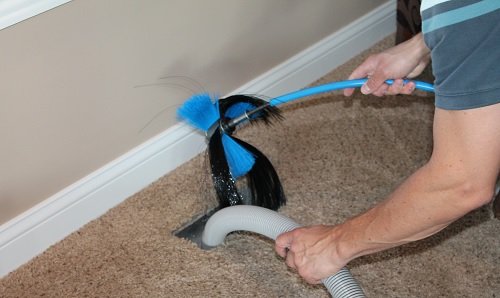
Rotary brushes, air whips, skipper balls, and compressed-air nozzles help separate debris that suction alone cannot remove. Each tool works differently, allowing technicians to match the cleaning method to metal ducts, flexible lines, lined sections, and other materials.
Careful selection prevents unnecessary damage during the service. Stiff brushes may work well on durable sheet metal, while softer agitation or controlled compressed air may suit flexible ductwork that could tear, collapse, or separate under aggressive contact.
Compressed-Air Systems Reach Deep Into Branch Lines
Air compressors power several tools used to clean narrow runs and hard-to-reach areas. Forward-blowing and reverse-blowing nozzles direct pressurized air along the duct interior, pushing or pulling loosened contamination toward the main vacuum connection.
Experienced technicians regulate pressure rather than using maximum force everywhere. Excessive air can disturb fragile insulation, damage flexible ducts, or drive debris into gaps, so an air duct cleaner must understand the system before selecting a nozzle and pressure setting.
Inspection Cameras Show What Ordinary Sight Cannot
Small cameras allow technicians to examine sections hidden behind walls, ceilings, and floors. Live video can reveal heavy dust, construction debris, damaged insulation, moisture stains, pest evidence, disconnected joints, or objects lodged inside a branch line.
Visual proof also helps homeowners judge whether the service addressed the reported problem. People searching for air duct cleaners near me can ask whether before-and-after images are available, since clear documentation provides more useful information than a quick look through an open register.
Access Tools Allow the Entire System to Be Reached
Professional work often requires controlled access to main trunks, plenums, return lines, and branch ducts. Sheet-metal cutters, drills, access panels, plugs, and sealants let technicians reach interior areas without leaving poorly closed holes behind.
Correctly placed openings improve both cleaning quality and airflow management. After the job, crews should close access points with durable materials that fit the duct type, preserve the system’s pressure, and allow future inspections without damaging nearby surfaces.
HEPA Vacuums Handle Registers and HVAC Components
Portable HEPA vacuums help clean register covers, return grilles, blower compartments, and areas around the air handler. Their filtered exhaust prevents collected dust from blowing back into the room, which is especially helpful in homes with pets, recent remodeling, or sensitive occupants.
Targeted vacuuming also supports the larger negative-air setup. During air duct cleaning in Brentwood, TN, technicians may use portable units for detailed work while commercial suction equipment controls debris moving through the main duct network.
Protective Equipment Keeps the Home and Crew Safer
Drop cloths, corner guards, vent covers, hose sleeves, and protective floor runners reduce the chance of scuffs or tracked-in dirt. Respirators, gloves, safety glasses, and protective clothing help workers avoid direct contact with dust, fiberglass, pest debris, and other unknown material.
Containment supplies become especially important when technicians find soot, mold-like growth, or contamination from animals. Responsible crews stop and assess unusual conditions instead of spreading questionable residue or treating every material as ordinary household dust.
What Should Homeowners Look for Before Hiring a Company?
Clear explanations often reveal whether a contractor has the right tools for the property. Homeowners can ask how the company creates negative pressure, which agitation devices it uses, whether its vacuums contain HEPA filters, and how technicians protect flexible or internally lined ducts.
Price alone does not show how thoroughly a system will be cleaned. A qualified air duct cleaner in Brentwood, TN should describe the equipment, access method, work area, and expected results before beginning, rather than offering the same process for every HVAC layout.
Professional Results Require More Than a Vacuum and Brush
Complete cleaning combines suction, agitation, inspection, access, filtration, and careful sealing. Missing one part of that process can leave debris behind, release particles into the home, or make it impossible to confirm what was actually cleaned.
Mr. B’s Air Duct Cleaning serves homeowners who want equipment suited to detailed duct and HVAC cleaning rather than a surface-level vent service. Their team can explain the tools used for a particular system, identify accessible problem areas, and carry out air duct cleaning with methods designed around the property’s ductwork and condition.