Last Updated on 8 hours ago by ackleyadam
Key Takeaways
- Equine business risks extend beyond riding lessons and ordinary barn chores.
- Clear daily procedures can help prevent avoidable hazards and reduce confusion when incidents occur.
- Accurate horse and client records support quicker decisions during emergencies.
- Staff, contractors, and volunteers need practical training that is refreshed regularly.
- Review property, transport, contracts, and insurance together because each affects the others.
Running a stable, lesson program, training business, or boarding operation means making many small decisions that affect horses, clients, visitors, and staff. A useful risk review does not require predicting every possible problem.
It requires identifying routine points where an injury, escape, communication breakdown, or property issue could become more serious. Insurance should be part of that review when a business handles other people’s horses.
Ark Agency, which provides specialized equine coverage for stables and instruction operations, explains how care custody and control liability insurance addresses situations involving non-owned horses that are boarded, trained, transported, or otherwise supervised. That focus makes it a relevant consideration for professionals reviewing responsibilities connected to horses in their care.
Start With A Clear Risk Profile
Begin by listing every service the operation provides, including occasional work that may not appear in advertising. Boarding, training, lessons, clinics, camps, breeding, sales, trailering, and show attendance each introduce different responsibilities. A private horse owner caring only for personal animals has a different risk profile from a trainer who accepts even one client-owned horse.
Then map the horse’s experience from arrival through departure. Consider unloading, stall assignment, turnout, feeding, training, trailering, event participation, and handoff to the owner. This exercise can reveal gaps that are easy to overlook when everyone is focused on the normal daily routine.
Build Strong Daily Safety Controls
Daily checks are among the simplest ways to reduce preventable problems. Assign responsibility for inspecting stalls, gates, latches, fencing, aisleways, water systems, feed storage, lighting, ventilation, and emergency exits. Record repairs that cannot be completed immediately, along with the person responsible and a target date.
Recommended Daily Checks
- Look for loose wires, sharp edges, broken boards, unstable equipment, and damaged fencing.
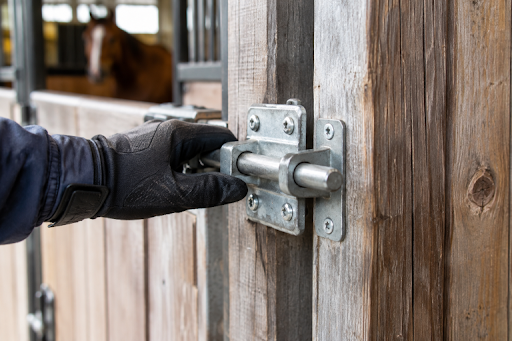
- Check that gates and stall doors close and latch securely.
- Keep medications and supplements clearly labeled and stored as directed.
- Note changes in appetite, behavior, movement, injuries, or signs of illness.
- Keep aisles, exits, trailer access areas, and fire equipment unobstructed.
For example, a quick inspection may reveal a loose gate hinge before turnout begins. Repairing it before a horse reaches the gate is usually faster and safer than responding after an escape. Consistent checks also make it easier to show staff what acceptable conditions look like.
Create An Emergency Plan That Works
An emergency plan should cover fire, severe weather, power loss, flooding, loose horses, injuries, disease concerns, and transport incidents. The plan should identify who calls emergency services, who contacts owners and veterinarians, who handles horse movement, and who keeps visitors away from active response areas.
Keep current emergency contacts, halters, lead ropes, flashlights, first-aid materials, identification supplies, and trailer information in a location authorized staff can reach quickly. The University of Minnesota Extension horse resources emphasize preparation, such as emergency supplies and evacuation planning, both of which are easier to manage before severe conditions develop.
Practice at least one drill each year. A daylight walk-through is helpful, but staff should also understand their roles when visibility is limited, phones are unavailable, or an unfamiliar person is present. Update the plan whenever the property layout, staffing, horse population, or emergency contacts change.
Keep Better Horse And Client Records
Records should provide authorized staff with enough information to make informed decisions without having to search through old messages. Each horse file can include the horse’s name, age, breed, color, markings, current photo, owner contacts, veterinarian, feeding instructions, medication notes, allergies, handling concerns, and loading difficulties.
Maintain dated notes for injuries, illness, training changes, incidents, arrivals, and departures. A current photo and updated emergency contact information can be especially useful if a horse must be identified, moved, or reunited with an owner quickly. Protect records from unnecessary disclosure while ensuring the people responsible for horse care can access them.
Train Staff, Contractors, And Volunteers
Written rules matter, but supervised practice is what helps people apply them around real horses. Cover safe leading, tying, turnout, stall entry, cross-ties, trailers, equipment, visitor management, incident reporting, and emergency communication.
Training should also explain when a staff member must stop work and call a manager, veterinarian, or emergency service. Short refresher sessions are often more practical than a single orientation meeting. A person may understand a rule on paper yet need guidance before handling a nervous horse, working in a crowded aisle, or loading a horse that is unfamiliar with the trailer.
Review Property And Transport Risks
A safe stall does not eliminate risks elsewhere on the property. Review paddocks, arena footing, mounting blocks, jumps, lighting, access roads, hay storage, equipment areas, and emergency vehicle access. Check that fences are appropriate for the horses using them and that gates operate safely.
Transport deserves its own review. Before each trip, inspect the trailer, confirm emergency contacts, verify required paperwork, plan the route, and consider what to do in the event of a delay or mechanical problem. The risk review should follow a client horse from arrival at the facility through off-site travel and return.
Match Insurance To Actual Operations
General business coverage may not respond in the same way to every horse-related situation. Review policies against actual operations, including client-owned horses, training, instruction, transport, off-site events, employees, independent contractors, and public activities. Ask the insurance professional to explain applicable limits, deductibles, exclusions, and defense provisions in plain language.
Questions To Ask During A Policy Review
- Which horses, activities, locations, and events are included?
- Are non-owned horses treated differently from business-owned horses?
- Does coverage apply during transport and away from the premises?
- Have recent service, staffing, property, or horse-population changes been reported?
Use An Annual Risk-Review Checklist
Set aside time each year to list services, inspect the property, update horse records, practice an emergency scenario, and review contracts and coverage. The 2026 national equine study from the U.S. Department of Agriculture examines areas including equine health management, disease occurrence, veterinary service use, and emergency preparedness, reinforcing the value of organized operational records.
Safer horse-care operations are built through repeatable habits. Maintaining facilities, training people, keeping current records, practicing plans, and maintaining coverage that reflects real activities can reduce confusion when conditions change. The goal is not perfection. It is a more prepared response for both people and horses when the unexpected happens.
Conclusion
Running an equine business requires attention to more than horse care and daily barn routines. Stable owners, trainers, boarding operators, and lesson providers should regularly review property conditions, emergency procedures, horse and client records, staff training, transportation practices, contracts, and insurance coverage.
Clear responsibilities and practical procedures can make it easier to respond to an injury, escape, equipment problem, or other unexpected situation. Insurance should also reflect the actual services and responsibilities of the operation, particularly when caring for clients’ horses.
By reviewing these areas together and updating them as the business changes, equine professionals can build a more organized approach to managing everyday risks and responding to emergencies.