Last Updated on 2 months ago by ackleyadam
Key Takeaways
- Begin planning once the event date, passenger count, and general route are known.
- Select vehicles based on people, luggage, mobility needs, and travel distance.
- Add buffer time for traffic, curb access, security checks, and crowds.
- Give every traveler one clear itinerary with a specific meeting point.
- Confirm contacts, accessibility requests, and return plans before departure day.
Moving a group through Washington, DC takes more coordination than booking separate rides. Conferences, school field trips, weddings, government meetings, sports events, airport transfers, and family tours all depend on guests arriving at the right place with enough time to board, clear security, and settle in before the event begins.
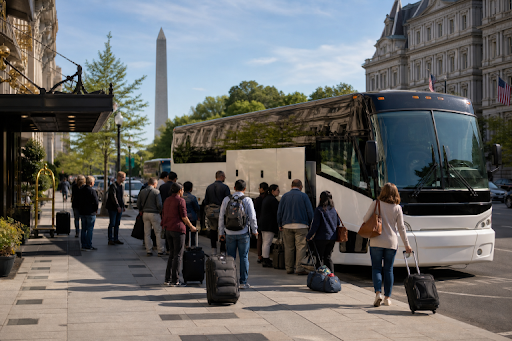
For groups that need a coordinated vehicle and schedule, charter bus rental DC options from America Transportation can be a useful starting point. America Transportation provides group ground transportation services for the DC metro area, including charter buses, minibuses, airport transfers, and scheduled shuttles.
Its focus on serving corporate, government, school, and event travelers across Washington, DC, Maryland, and Northern Virginia makes it relevant for planners who need more than individual rides.
Why Group Transportation Needs More Planning?
A large group cannot easily adjust when one passenger is late, a hotel entrance is blocked, or a venue changes its loading instructions. In Washington, DC, busy streets, limited curb space, demonstrations, construction, security zones, and popular attractions can all affect the route. A written plan reduces scattered arrivals, missed sessions, and last-minute calls between guests, drivers, and event staff.
Build A Passenger And Route Plan
Gather the core details before requesting quotes or confirming a vehicle. Start with the expected passenger count, then note luggage, presentation materials, sports equipment, strollers, wheelchairs, or other items that need space. Record every pickup, drop-off, meal stop, airport transfer, and return movement. Most importantly, set the required arrival time, not simply the event start time.
Create One Shared Itinerary
Your itinerary should include full addresses, departure times, group leader phone numbers, passenger instructions, and a backup meeting point. Send the final version to travelers and keep a digital copy available to the organizer. If several hotels are involved, consider staggered pickups rather than trying to collect everyone at one crowded entrance.
Match The Vehicle To The Group
- Passenger vans: Best for smaller groups and short local transfers with limited luggage.
- Minibuses: Often practical for medium-sized groups, hotel shuttles, and local event routes.
- Motorcoaches: Better for larger groups, longer distances, full-day schedules, and substantial luggage.
- Multiple vehicles: Useful when guests are arriving from different locations or need separate schedules.
Do not fill every seat just because it is available. A little extra capacity can make luggage handling, boarding, and seating more comfortable, especially for guests traveling with coats, bags, mobility equipment, or children.
Plan Around Traffic, Loading, And Permit Rules
Ask each hotel and venue exactly where buses may load, unload, wait, and turn around. A front entrance that works for cars may not have enough room for a bus. Confirm street closures, construction, security restrictions, and parking procedures in the vicinity of the travel date.
Chartered buses with more than 15 seats may also have District-specific registration or trip-permit requirements, so planners should review the DC charter bus trip permit guidance before finalizing the route.
Choose Pickup Points Guests Can Find
Use a recognizable location, such as a named hotel entrance, a designated bus loop, or a clearly marked parking area. Avoid directions like “outside the venue” or “near the street.” When possible, send a simple map or photo, identify the group leader, and allow extra boarding time for older adults, children, and guests who use mobility devices.
Account For Accessibility And Comfort
Ask about wheelchair access, step-free boarding, service animals, secure storage for mobility equipment, and seating requests early in the process. For longer trips, consider rest stops, climate control, charging outlets, restroom availability, and luggage capacity. Give the final passenger list and accommodation requests to the transportation provider before travel day, not at the curb.
When Can a Local Provider Help?
Local transportation knowledge can be valuable when a schedule includes airport pickups, downtown hotels, venues in Maryland or Northern Virginia, or several stops across the region. A provider familiar with common loading areas and rush-hour patterns can help create a more realistic timeline. Still, the planner should verify the venue’s instructions directly because access rules can change for a specific event.
Create A Travel-Day Checklist
- Confirm the final passenger count and luggage needs.
- Recheck pickup addresses, loading instructions, and venue contacts.
- Share the dispatcher or driver contact details with the group leader.
- Send guests the meeting time, exact location, and boarding instructions.
- Review weather, traffic, road closures, and event alerts.
- Allow time for boarding, luggage handling, and security screening.
- Keep a backup meeting point and a copy of the itinerary available.
Compare Quotes Beyond The Base Price
A lower quote is not always the better fit. Ask whether pricing includes mileage, hours, fuel, tolls, parking, driver time, waiting time, and schedule changes. Confirm that the vehicle suits the actual passenger and luggage count, and review cancellation terms, accessibility arrangements, and the after-hours contact process. A complete quote should match the itinerary rather than leave important details for travel day.
Use Public Transit For Smaller, Flexible Groups
Private transportation is not the only option. Small groups with flexible schedules may combine walking, hotel shuttles, commuter rail, and Metro. The WMATA trip planning tools can help travelers check routes, schedules, service alerts, and nearby transit options before making a final decision.
Common Mistakes To Avoid
- Booking before confirming the passenger count and luggage volume.
- Leaving no time buffer for traffic, crowds, or security.
- Using a vague pickup point that guests cannot identify.
- Assuming every hotel or venue allows buses at its main entrance.
- Forgetting to arrange return transportation after the event.
- Waiting too long to request an accessible vehicle.
Final Planning Advice
Successful group transportation in Washington, DC begins with clear details: who is traveling, where they need to be, what they are carrying, and how much time the trip will actually take. Plan early, communicate the itinerary clearly, confirm loading instructions, and build in room for the unexpected. Those steps help the group spend less time waiting and more time focused on the event.