Last Updated on 24 seconds ago by ackleyadam
Key Takeaways
- Inkjet printer issues can stem from ink cartridges, printheads, paper-feed components, software settings, network connections, or aging hardware.
- A structured diagnosis can help a business avoid unnecessary replacement decisions and repeated employee troubleshooting.
- GEM Laser Express can help Sterling-area organizations evaluate printer repairs, maintenance needs, supplies, and replacement options.
- Preventive maintenance is especially valuable for printers that support daily business operations or deadline-sensitive work.
- A useful service request includes the exact printer model, error messages, print samples, location, and a clear description of the problem.
What Should a Sterling Business Do When an Inkjet Printer Stops Working?
When an office printer produces faded pages, repeated error messages, paper jams, or no output at all, the best next step is to document the symptoms before trying random fixes. Businesses that need an inkjet printer service option in Sterling, VA can turn to GEM Laser Express for help evaluating the device, the print environment, and the most practical path forward.
Not every printer problem requires a new machine. A professional evaluation may identify a consumable issue, a clogged or misaligned printhead, worn feed components, a driver conflict, a network configuration problem, or a repairable hardware fault. GEM Laser Express can help businesses determine whether repair, maintenance, replacement supplies, or new equipment is the better fit for the situation.
Why Inkjet Printer Problems Can Disrupt Business Operations
An inkjet printer may appear to have one simple problem, but the cause is not always obvious. Poor-quality output can be due to old ink, dried nozzles, printhead alignment issues, unsuitable media, or settings that do not match the job. A printer that will not accept work may instead have a queue, driver, wireless, or network issue.
These failures affect more than the device itself. Employees may spend time restarting equipment, unnecessarily replacing cartridges, reprinting documents, moving jobs to another printer, or waiting for technical help. For organizations that print proposals, shipping paperwork, customer materials, forms, or internal documents, even a modest interruption can create workflow delays.
Common Signs That a Printer Needs Attention
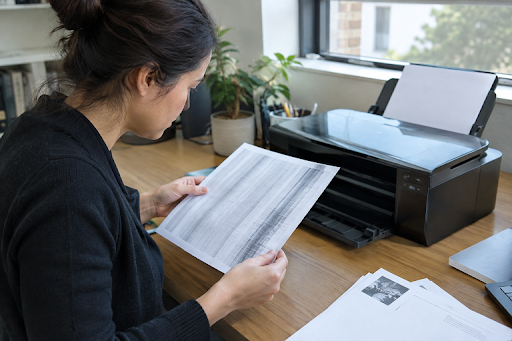
- Streaks, banding, faded areas, missing colors, smears, or uneven print density.
- Repeated paper jams, multiple-sheet feeding, skewed pages, or media that does not move through the device correctly.
- Ink cartridge alerts that persist after a cartridge change.
- Error codes, service warnings, or messages that prevent printing.
- Users who cannot find the printer, send jobs successfully, or receive completed pages.
- Recurring problems that return shortly after basic cleaning or troubleshooting.
How Can GEM Laser Express Diagnose an Inkjet Printer Issue?
Effective printer service begins with evidence rather than assumptions. GEM Laser Express can review the printer model, reported symptoms, error messages, print samples, recent changes, and the device’s importance to the business. That information helps distinguish an isolated fault from a recurring condition that may require a broader solution.
- Review the reported issue. Record when the problem started, what occurs during printing, and whether every user or job is affected.
- Inspect print quality and consumables. Check for missing colors, streaks, alignment issues, cartridge compatibility issues, and signs of leaks or dried ink.
- Assess the paper path. Examine trays, rollers, guides, and output areas for wear, debris, or feeding problems.
- Check connectivity and settings. Review drivers, print queues, network communication, and device configuration when jobs fail to reach the printer.
- Compare repair and replacement needs. Consider the condition of the device, availability of supplies or parts, usage requirements, and the cost of ongoing interruptions.
Why Preventive Printer Maintenance Matters?
Preventive maintenance is designed to identify smaller issues before they become work-stopping failures. Depending on the model and how heavily it is used, maintenance can include cleaning, alignment checks, paper-path inspection, replacement of worn components, firmware review, and verification of print quality.
A maintenance schedule should reflect the printer’s workload, environment, age, and role in the organization. A lightly used desktop inkjet may need occasional attention, while a shared device handling regular color documents or specialty media may benefit from more deliberate monitoring. Planned service also allows a business to review whether the device still fits current needs.
When Repair Makes Sense and When Replacement Is Better
Repair May Be the Right Choice When:
- The problem is limited to a known and repairable component or configuration issue.
- The printer continues to meet the organization’s speed, media, color, and connectivity requirements.
- Compatible supplies and serviceable parts are available.
- The device has not developed a pattern of frequent or unrelated failures.
Replacement May Be the Better Choice When:
- Print-quality failures or service alerts keep returning after appropriate repair attempts.
- The printer no longer supports the volume, paper sizes, workflow, or user access that the business requires.
- Supplies, parts, or manufacturer support have become difficult to obtain.
- The organization needs a multifunction device, higher capacity, improved security features, or a different printing technology.
Choosing a More Suitable Printer Setup
A purchase decision should look beyond the initial equipment price. Businesses should consider monthly page volume, color needs, print speed, paper sizes, specialty media, scanning or copying requirements, number of users, available space, and expected supply costs. A device that is too small for the workload can create frequent interruptions, while an oversized device may add unnecessary expense.
Energy and paper use can also be part of the evaluation. ENERGY STAR guidance for imaging equipment notes that certified printers and multifunction devices incorporate power-management features and may include automatic duplexing capabilities. Duplex printing, sensible sleep settings, and digital workflows can help offices reduce avoidable paper use when those practices fit the job.
GEM Laser Express can help organizations compare an inkjet printer with alternatives such as a multifunction device, a higher-volume printer, an A3-capable unit, or a large-format solution. The goal is not simply to replace a malfunctioning machine, but to select equipment and service support that match the actual workflow.
What to Include in an Inkjet Printer Service Request
Providing clear information at the start can speed up the evaluation process and reduce follow-up questions. Include:
- The business name and service location.
- The printer manufacturer and exact model number.
- A description of the issue, including when it began and how often it occurs.
- Any error code or message displayed by the printer or computer.
- Photos or printed samples that show streaks, fading, missing colors, or other quality concerns.
- Recent changes to cartridges, ink, paper, firmware, network settings, or office layout.
- Any deadline or operational need that makes the printer especially time-sensitive.
A Practical Local Partner for Printer Support
Businesses do not need to treat every inkjet printer failure as an automatic reason to buy new equipment. With a clear description of the issue and a structured assessment, GEM Laser Express can help Sterling, Virginia organizations identify whether the next step should be repair, preventive maintenance, supplies, configuration support, fleet planning, or replacement equipment.
By addressing both the immediate problem and the broader printing workflow, businesses can make more informed decisions about the equipment they rely on every day.